Summary:
Fire-resistant sponge, also known as flame-retardant sponge, fire-resistant cotton, flame-retardant cotton, is generally a fire-resistant material synthesized by adding flame retardants to various polyurethanes. Fire-resistant sponge is mainly used in furniture manufacturing, massage equipment manufacturing, baby carriage manufacturing, decoration, automobile Accessories, wall sound absorption, thermal insulation pipes, fire doors and fire shutters, etc.
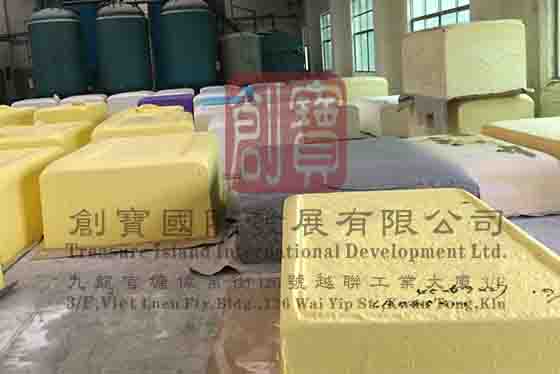
1. Product characteristics of fireproof sponge:
1. Corrosion resistance: The fireproof sponge is resistant to corrosion by chemicals such as seawater, grease, acid, and alkali, and is antibacterial, odorless, and non-polluting.
2. Processability: The fire-resistant sponge has no joints, and is easy to process such as hot pressing, cutting, gluing, and lamination.
3. Anti-vibration: Fire-resistant sponge has high resilience and tensile strength, strong toughness, and has good shock-proof/buffering performance.
4. Thermal insulation: Fire-resistant sponge has excellent thermal insulation, cold-proof and low-temperature performance, and can withstand severe cold and exposure.
5. Sound insulation: The fireproof sponge has closed cells, and the sound insulation effect is good.
2. Classification of fireproof sponge:
Fireproof sponges are divided into three types: thin, medium and thick, among which there are soft and hard points:
1. Thin (below 1.0mm -1.2mm), which is conducive to defensive play;
2. Medium (below 1.2mm -1.7mm), a combination of attack and defense;
3. Thick (below 1.7mm -2.0mm), attacking style.
Fireproof sponge hardness: 20-35° soft sponge, 26-40° neutral sponge, 41-45° for attacking and hitting, 46-55° full attack type (hard sponge), 56°≈superhard type .